FIVE MINUTES INTERVIEW WITH Irene Christianti
How did you start into natural-dyed world and what is your background?
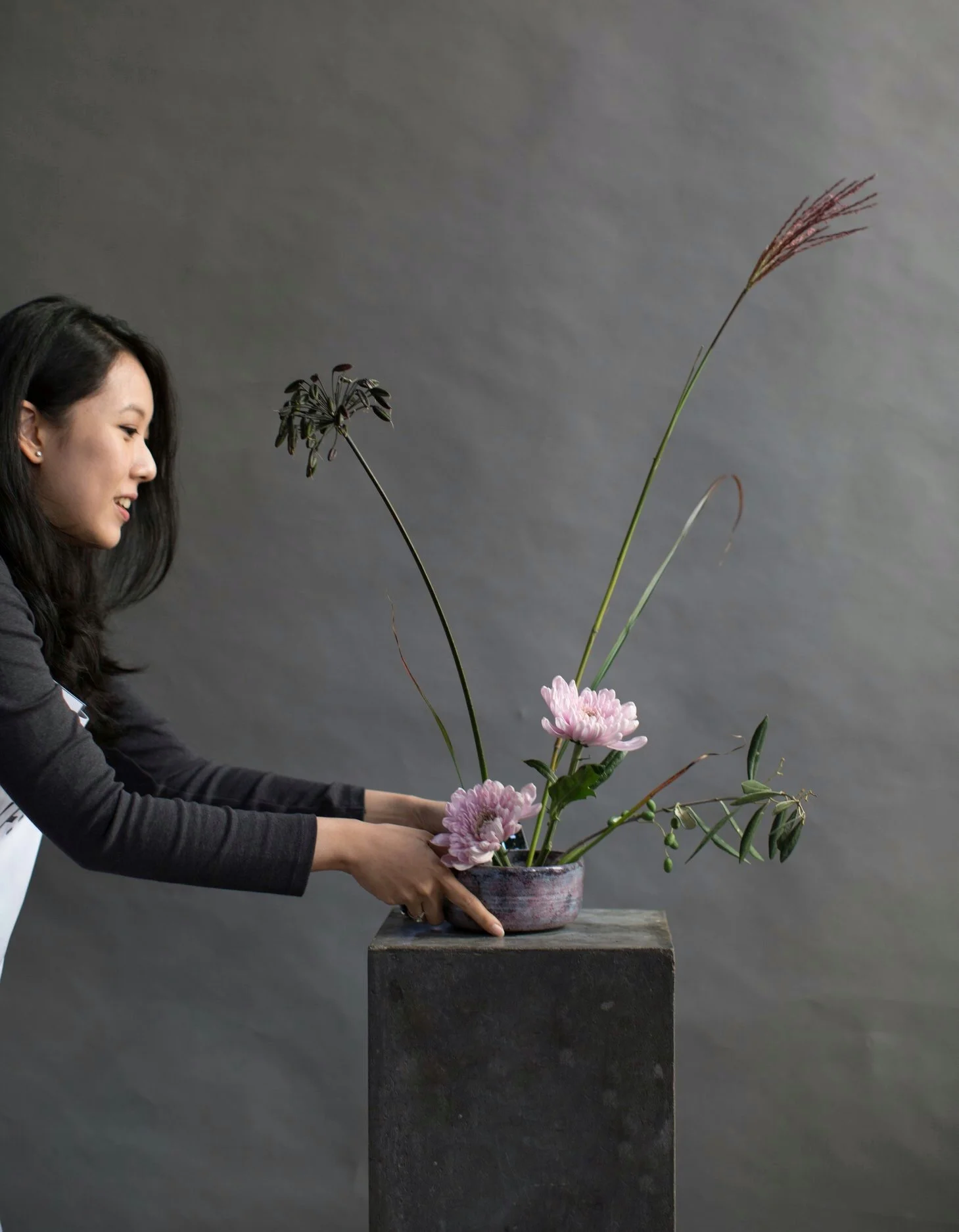
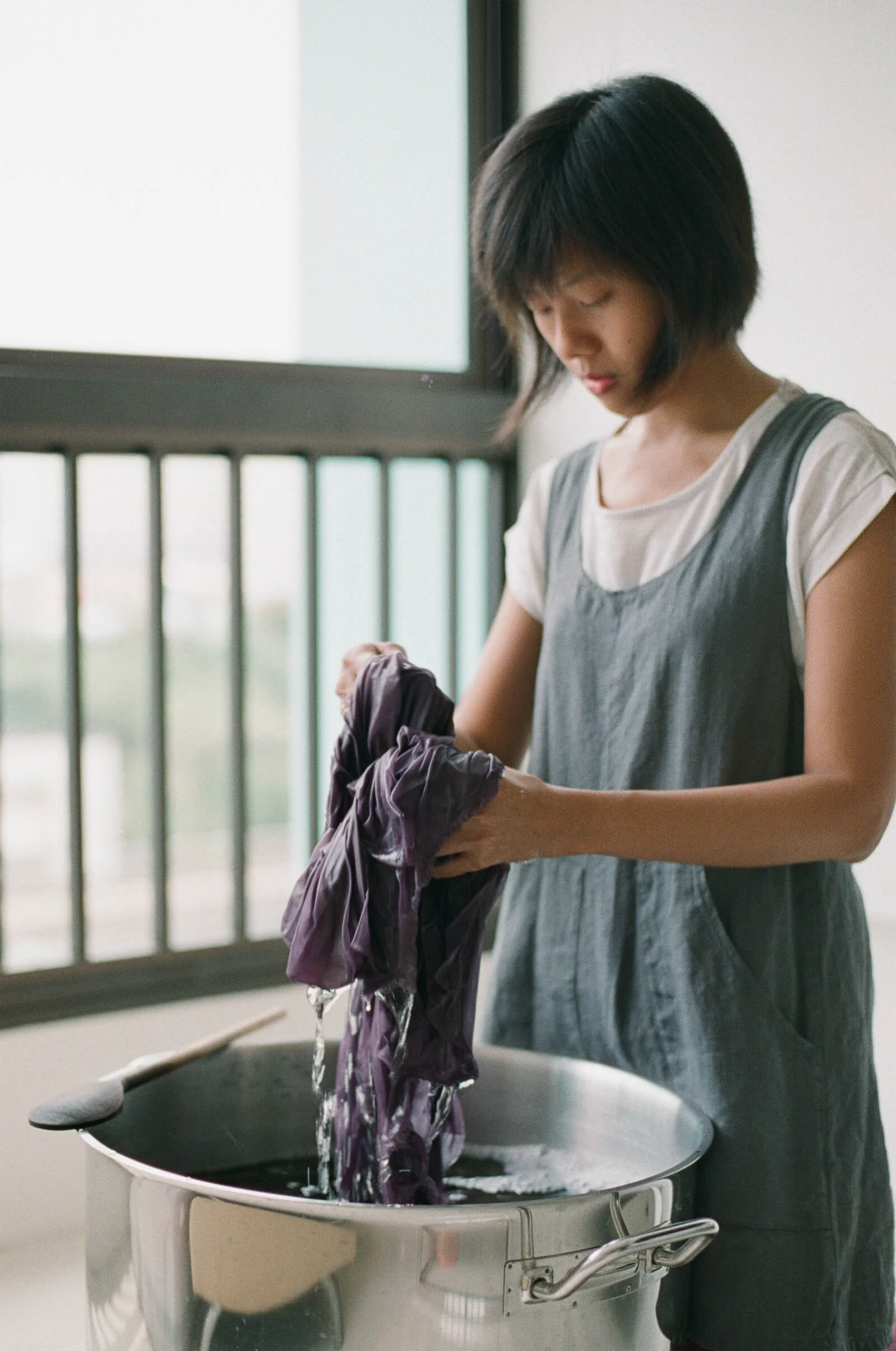
Ever since I was a kid, I love to create things with my hands. I was a florist a few years back (before that I used to be a computer engineer but let's keep that story for another time ) and it is my love for flowers and plants that introduced me to the wonderful world of natural dyeing. It truly fascinates me that the flowers and plants that I see with my eyes as they are, is able to give us yet another beautiful and tangible gift, which is their colours, something that I’ve never thought of before. With each experiment that I do, witnessing every single colour that emerges from the dyebath has never ceased to put my heart in awe and wonder.
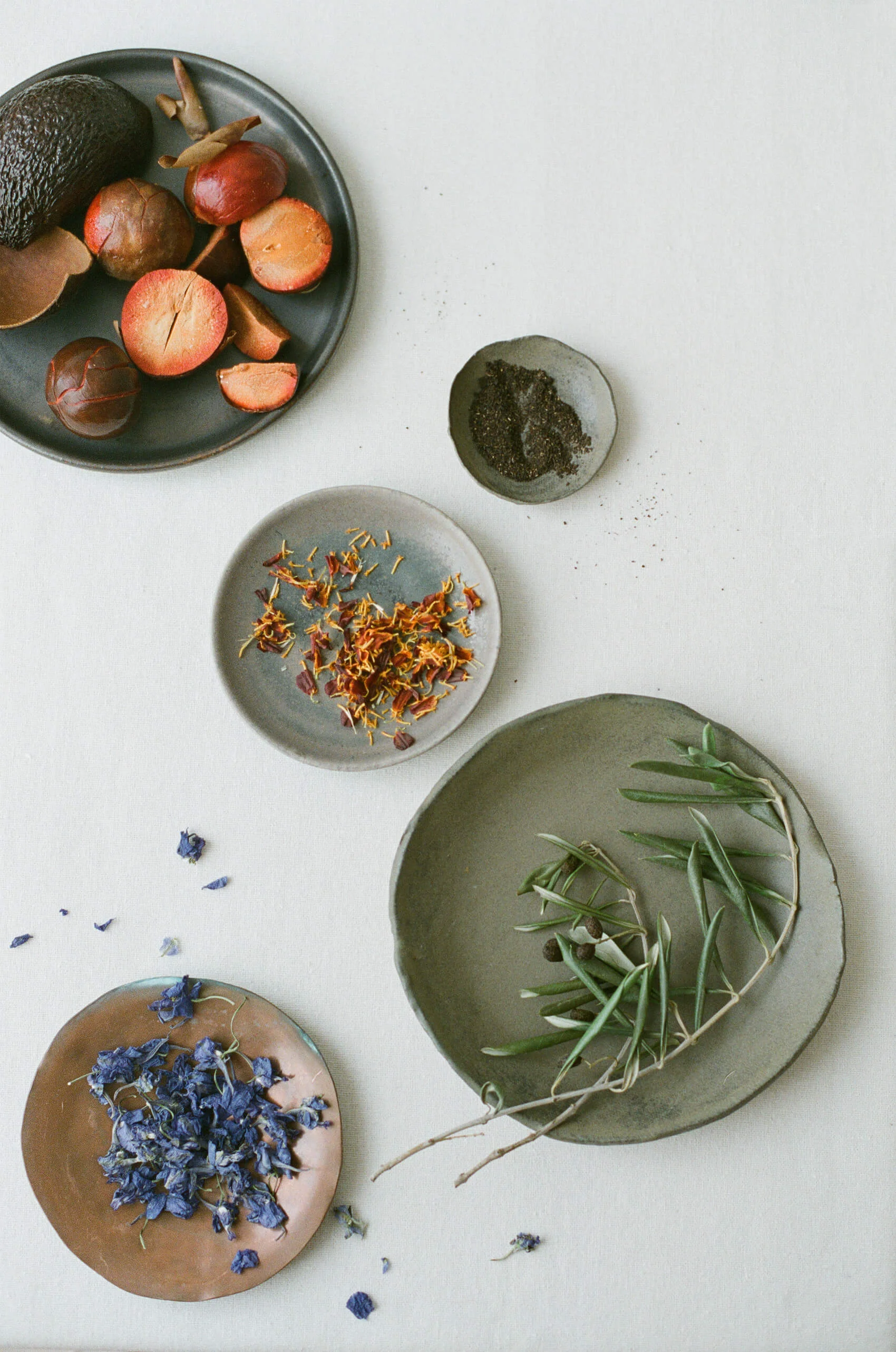
Image by Eirene Artisan
Could you tell us your experience in creating your first ribbon?
When I first started my natural dye and silk ribbon journey in 2015, I did my very first experiment with what I had on hands. At that time I had some leftover flowers from a bouquet order, so I thought I just tried to "cook" them and see what colours they produced. I experimented with acacia leaves, rose leaves, blue delphinium petals, and red charm peony petals and with my limited knowledge I let them boiled which resulted in all shades of brown. Haha! As I learn more about natural dyeing afterwards, it is more advisable to extract the colour slowly over low heat as some colours will go brown if they are overheated. But even if I obtained only browns at that time, I was hooked instantly and ever since I have been hungry to explore more.
What is the materials you used to create natural-dyed ribbon ? Do you have any favourite materials to work with?
It is amazing what mother nature has in store for us to colour our world. I use roots, barks, leaves, flower petals (such as marigold), avocado pit and skin, pomegranate skin, indigo, walnut husk, and my favourite keeps changing with time but for now it is avocado pits. I can’t wait to experiment more with it!
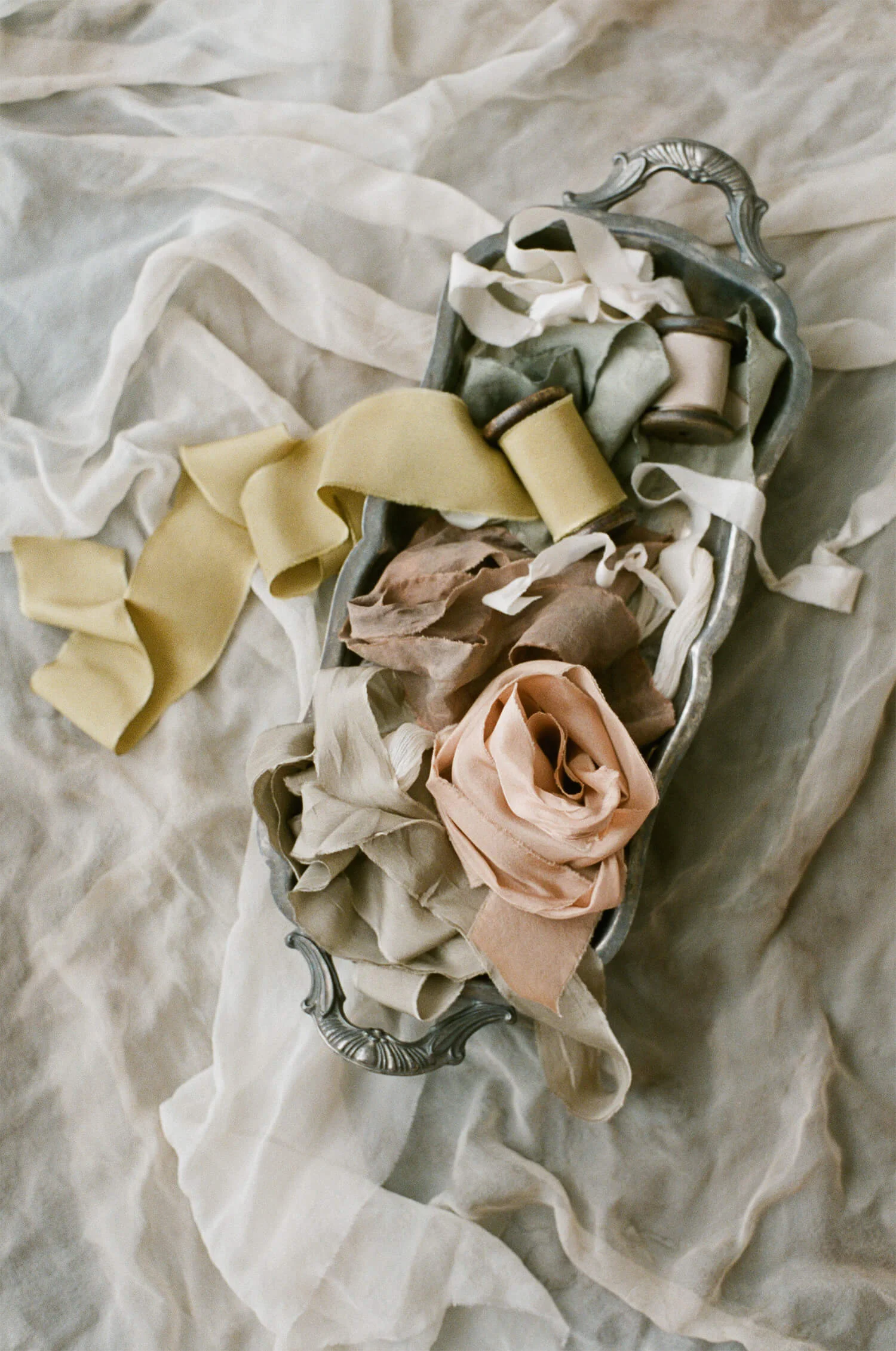
Image by Eirene Artisan
Which creative process do you enjoy the most?
The process that I enjoy the most is when I am concocting the recipe for new colours; such as recently I've been dreaming to make some grey green colour for my Christmas shop update. I browsed through my logbook to see what materials produce green and grey. I then decided to try pomegranate skin and oak galls and experimented with mixing them in various percentages. It's always exciting to see what colour emerges from each experiments, and it never fails to amaze me. The results are all beautiful that sometimes I would have a hard time deciding which one to make into my ribbon collection.
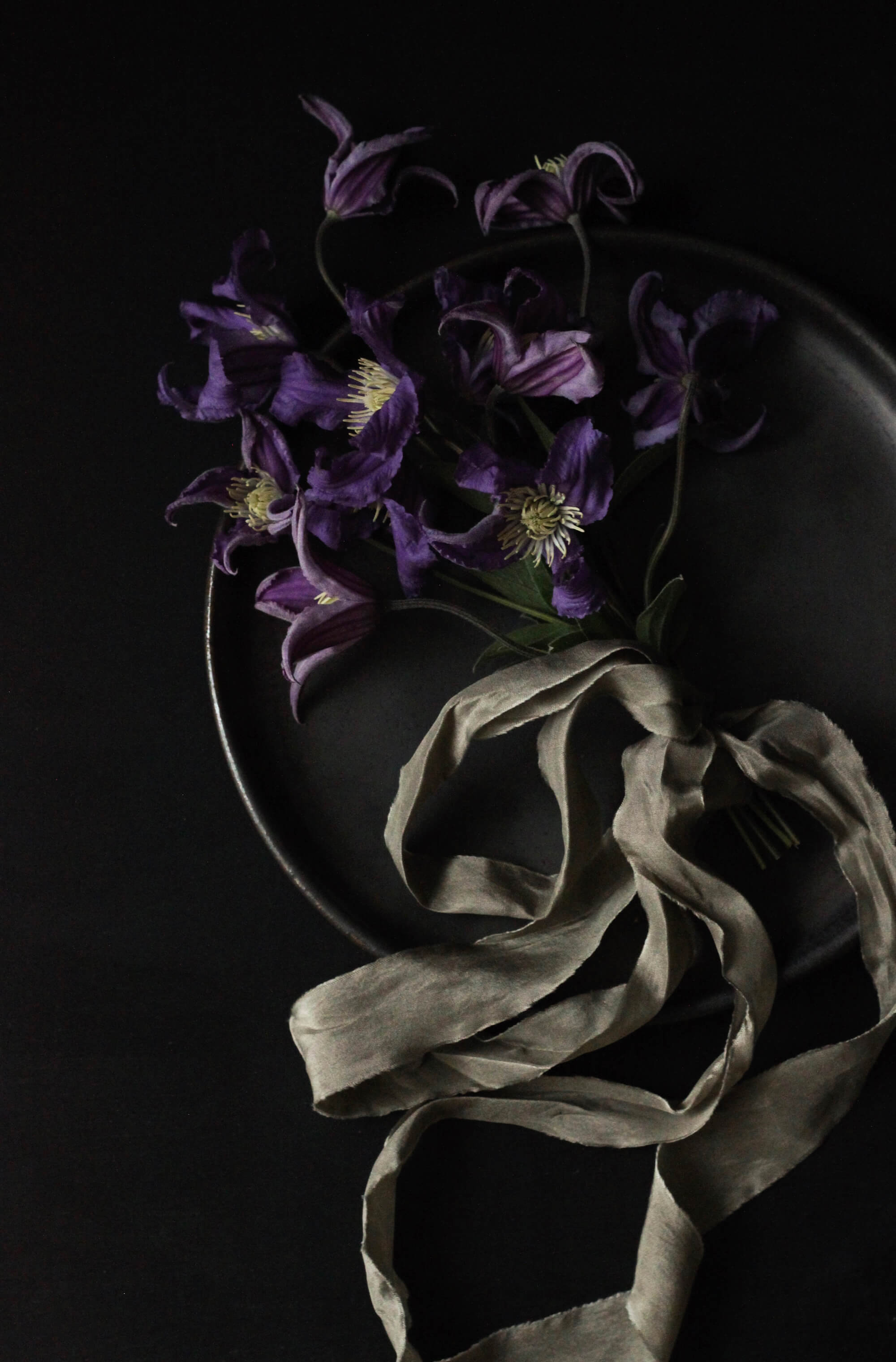
Image by Eirene Artisan
What is the challenge in creating natural-dyed ribbon?
One challenge in creating naturally dyed ribbon would be in embracing the slow process of extracting and hand-dyeing the colours onto the fabric, especially in this fast pace world. But in turn the whole process of natural dyeing and handcrafting ribbons have taught me about life in general, about slow living and the virtue of patience. Good things take time. Growing up takes time. Cultivating plants takes time. I love this wisdom by Lao Tzu "Nature does not hurry, yet everything is accomplished".
Another challenge with natural dyeing for me would be what-you-see-is-not always-what-you-get. We cannot judge what the final colour will be on the fabric by the colour of the dyebath. We can only know the actual colours after hours of dyeing, soaking, rinsing and waiting for the whole fabric to dry, and the shade will vary depending on the plant's growing condition, time of harvest, water quality, pH level, dyeing temperature and soaking time among many other variables. It is best to approach natural dyeing with an open heart, the outcome is always a surprise, often a very pleasant one, another time may be the opposite mainly because as a maker and artist I have a certain aesthetic that I would like to achieve in my work. But instead of seeing this as something negative, I am learning each day to embrace such beauty of natural dyeing. This experience in turn teaches me about letting go, not everything in life always goes according to our plan, and sometimes it could lead to something better. Even though I would have to postpone launching the colour for another month or so, in the end it has always been a blessing in disguise. When this happens normally I will overdye the fabric to modify the colour, it requires more time to complete that particular batch of fabric but the final result more often than not is much more mesmerising than what I initially had in mind! It is truly a wonderful gift mother nature has for us